


 Giriş yap
 Haberler
 Türkiye'de Hava durumu
 Türkiye'de Manyetik fırtınalar
 Türkiye'de Namaz vakti
 Türkiye'de Değerli metaller
 Türkiye'de Döviz çevirici
 Türkiye'de Kredi hesaplayıcı
 Türkiye'de Kripto para
 Türkiye'de Burçlar
 Türkiye'de Soru - Cevap
 İnternet hızını test et
 Türkiye Radyosu
 Türkiye televizyonu
 Hakkımızda



SI Detector: How It Works and Why You Need One Son Haberler
Sonhaberler sayfasından alınan verilere dayanarak, Ankara24.com haber yayımlıyor.
You've probably read something online and thought, "A person didn't write this." The phrasing felt a little too smooth. The ideas went nowhere. Every paragraph sounded the same. That gut feeling is common now, and it's why so many people have started using an SI detector to check whether text came from a human or a machine. Teachers use them in essays. Editors run them on freelance drafts. Business owners check their website copy before it goes live.
This guide covers how these tools work, why they matter, who uses them, and how to pick one you can trust. No technical background needed.
 What Is an SI Detector?
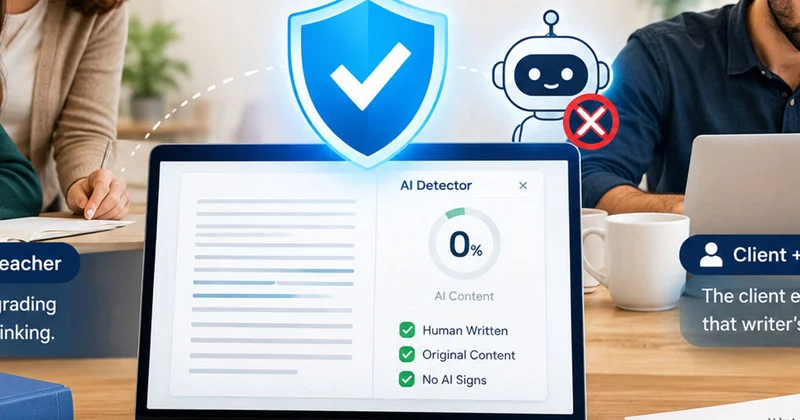
An SI detector is a tool that scans written content and estimates how much of it was produced by synthetic intelligence. That means text from chatbots and AI writing tools rather than a human typing their own thoughts. You paste in a block of text, click a button, and get a result within seconds. Most tools show a percentage score, and many highlight the specific sentences that look machine-made.
SI Detector vs. Plagiarism CheckerPeople often mix these two up, but they do different jobs.
A plagiarism checker compares your text to existing sources. It asks, "Has this been copied from somewhere?" An SI detector asks a different question: "Was this written by a machine?" A piece of AI-generated text can be 100% original in the sense that it doesn't match any published source. A plagiarism checker would pass it. An SI detector is built to catch it.
Quick takeaway: If you care about who or what wrote something, a plagiarism checker alone won't tell you.
How Does an SI Detector Work?You don't need to understand the math to use one. Still, knowing the basics helps you read the results with a clearer head.
AI writing tools build sentences by predicting the most likely next word, over and over. That process leaves patterns behind. Humans write in a messier, less predictable way. We take odd turns, use strange word pairings, and change rhythm without thinking about it.
 The Signals It Looks For
Most detectors study a handful of traits in the text:
Predictability: How expected each word is, given the words before it. Machine text tends to pick the "safe" choice again and again.
Sentence variety: People naturally mix short punchy lines with longer, winding ones. AI output often keeps sentences at a similar length.
Word choice: Some words and phrases show up far more often in machine writing than in everyday human writing.
Structure: Repeated paragraph shapes, tidy lists of three, and identical sentence openings can all raise a flag.
Tone consistency: Human writing tends to drift a little in mood and energy. Machine writing often stays flat from start to finish.
Reading the ScoreA score of 80% doesn't mean 80% of the words were written by AI. It usually means the tool is fairly confident the text shows strong machine-like patterns. Treat it as a strong hint, not a final verdict.
Quick takeaway: The detector measures patterns, not proof. Use the score to guide a closer look.
Why an SI Detector MattersYou could argue that it doesn't matter who wrote something as long as it's good. In some cases, that's fair. But in many situations, it matters a lot.
Trust and HonestyWhen a student hands in an essay, the teacher is grading the student's thinking. When a client pays a writer, they expect that writer's skill and effort. If a chatbot did the work instead, the deal has been broken, even if nobody says so out loud. A detector gives people a way to check.
 Search Rankings and Reader Loyalty
Search engines say they reward content that's helpful and written with real expertise. Bland, mass-produced articles rarely meet that bar. Readers notice too. They bounce from pages that feel hollow and stick around for writing that sounds like a real person talking to them.
Accuracy ProblemsAI tools sometimes state false information with total confidence. They invent statistics, quotes, and even sources. If you publish machine-written content without catching it, you could end up spreading mistakes under your own name. Running a check prompts you to slow down and verify the facts.
Quick takeaway: Detection protects your credibility, your rankings, and your readers.
Who Uses SI Detectors?
The user list is wider than most people expect. Here are the groups that lean on these tools most:
Teachers and professors checking essays, research papers, and take-home exams
Editors and publishers reviewing guest posts and submitted manuscripts
Marketing teams and agencies vetting work from freelance writers before paying for it
Website owners auditing their own pages for content that may hurt search performance
Recruiters and hiring managers reviewing cover letters and written test answers
Students and writers checking their own work so it doesn't get wrongly flagged
That last group surprises people. Plenty of honest writers now run their drafts through a detector before submitting, just to make sure their natural style won't trigger a false alarm.
A Real-World ExamplePicture a small agency that hires five freelancers to write blog posts. One month, three of the articles feel oddly similar. Same structure, same flat tone, same overused phrases. The editor runs them through a detector, and all three score high. A quick conversation with the writer clears things up, and the agency sets a clear policy going forward. Without the tool, the editor might have published weak content and never known why traffic dropped.
What to Look for in a Good SI DetectorNot every tool is worth your time. Some give wildly different results for the same text. Others are hard to read or bury the useful parts behind paywalls. Here's what separates a solid option from a frustrating one:
Accuracy across models: The tool should catch text from many popular AI writers, not just one.
Sentence-level highlighting: A single score is useful, but seeing exactly which lines look suspicious is far more helpful.
Low false positive rate: A good detector shouldn't flag genuine human writing as machine-made very often.
Speed and ease of use: You should get results in seconds without wading through a confusing dashboard.
Multi-language support: If you work with content in more than one language, check that the tool handles it.
Privacy: Your text shouldn't be stored or reused without your permission.
Free access or fair pricing: Many reliable tools offer free checks, with paid plans for heavier use.
 Test It Yourself First
Before you trust any detector, run a quick test. Paste in something you know you wrote yourself. Then paste in a paragraph you generated with a chatbot. A reliable tool should tell the two apart clearly. If it can't, keep looking.
Common Mistakes to AvoidEven a great detector can lead you astray if you use it the wrong way.
Treating the score as final proof. No detector is perfect. Formal, technical, or heavily edited human writing can sometimes score high. Always pair the result with your own judgment.
Checking tiny snippets. A single sentence or two doesn't give the tool enough to work with. Longer passages produce more dependable results.
Ignoring context. A non-native English speaker might write in a simpler, more predictable style. That doesn't mean they used AI. Consider who wrote the piece and how before you jump to conclusions.
Using only one tool for high-stakes decisions. If someone's grade or job depends on the outcome, cross-check with a second detector and talk to the person directly.
Quick takeaway: The tool starts the conversation. It shouldn't end it.
Final ThoughtsMachine-written text is everywhere now, and it's getting harder to spot by eye alone. An SI detector gives you a fast, simple way to check what you're reading, grading, or publishing. It looks for patterns that humans rarely produce, like overly predictable wording, flat tone, and repeated sentence shapes, then gives you a score and often points to the exact lines that raised concern. Teachers, editors, marketers, recruiters, and everyday writers all have good reasons to use one. The key is to pick a tool that's accurate, easy to read, and respectful of your privacy, and to treat its results as a starting point rather than a final ruling.
Your next step is simple. Take a piece of content you're unsure about, whether it's a freelancer's draft, a student essay, or your own blog post, and run it through a detector today. Compare the result with your own instincts. You'll quickly get a feel for what the tool catches and how it fits into your work.
 Bu konudaki diğer haberler:
 Görüntülenme:112
 Bu haber kaynaktan arşivlenmiştir 14 Ekim 2026 20:27 kaynağından arşivlendi






 En çok okunanlar